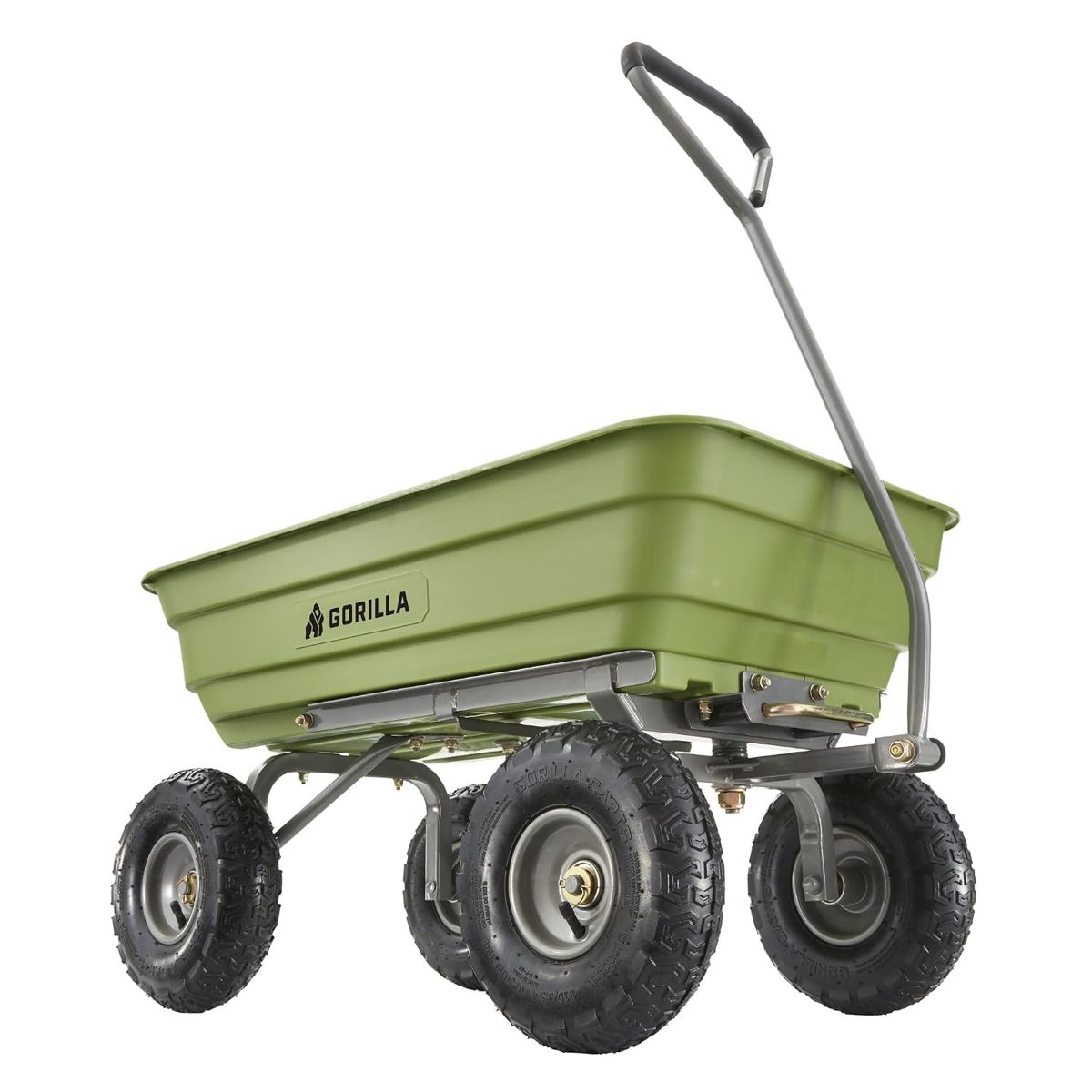
Gorilla Carts poly dump cart (600 lb)
The wagon itself: 600-lb poly dump cart, pneumatic tires, and the cart the DIY crowd converts when Level 2 calls.
See the pickBerners were bred to pull cheese carts. Carting has levels: wagon and leash this weekend, siwash harness by summer, draft titles and parades for the obsessed.
 The Berner Edit
Every Berner owner eventually hears it: "He looks like he should be pulling something." He should. In the Bernese Oberland these dogs hauled milk, cheese, and woven goods to market — the draft work is why the breed has that chest, that rear end, and that park-beside-the-stall patience.
What nobody tells you is that carting is not one hobby. It's a spectrum, and you can get on at the level that matches your ambition (and your garage space). Here's the whole ladder.
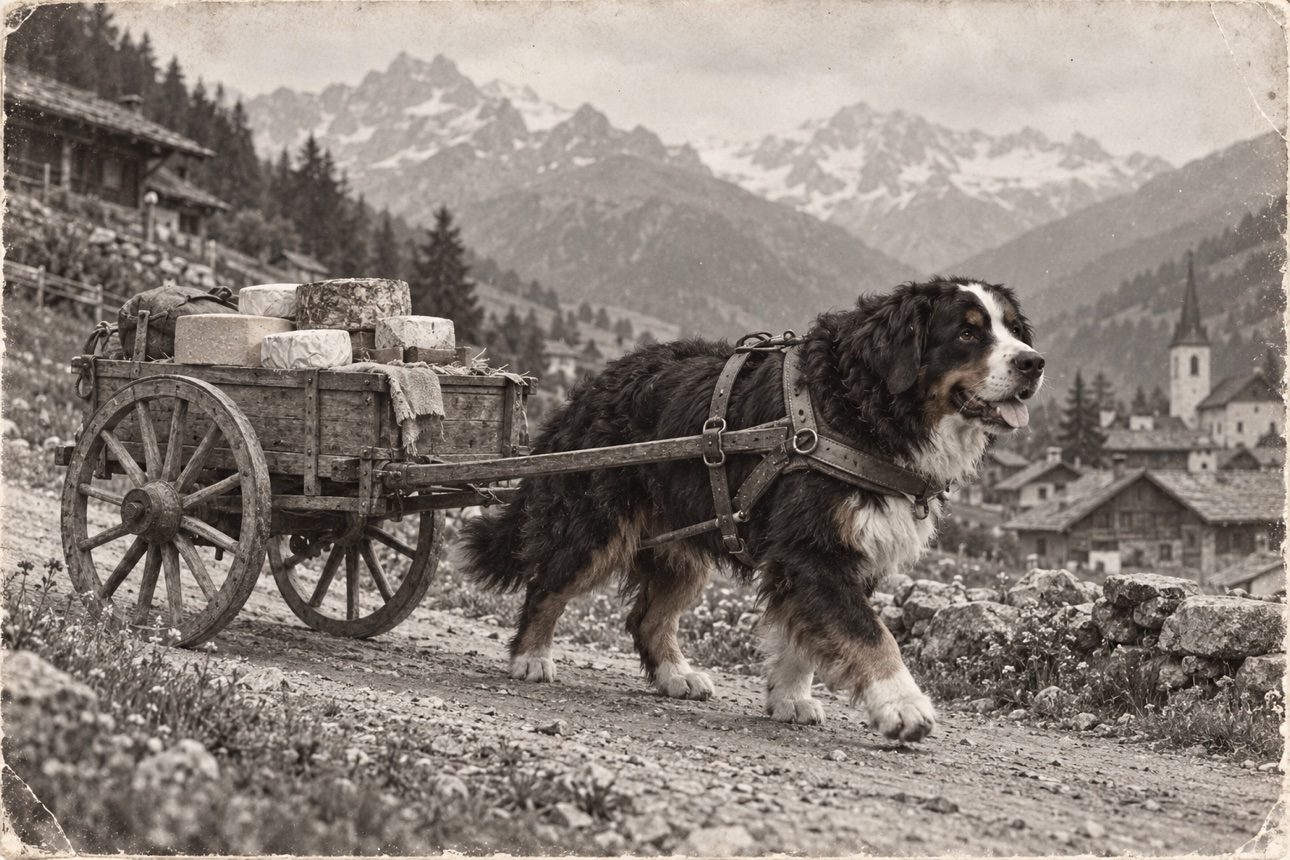
For most of their history, Berners weren't a breed. They were a job. In the canton of Bern, the Senn was the alpine dairyman who took the cattle up to the summer pastures and made the cheese; the Sennenhund — literally "dairyman's dog" — was his workforce: cattle driver, farm guard, and transport department. The milk cans went down to the village dairy behind a dog, and the empties came back up the same way. Cheese and woven goods rode to market behind a dog too. A fit Berner pulls many times his own weight on wheels and costs a bowl of food a day, which is how the breed earned its period nickname: the poor man's horse.
Around Bern, the type had a name of its own — the Dürrbächler, after the inn at Dürrbach where the farm dogs were bought and sold. Nobody was keeping pedigrees. Farmers kept dogs that worked, and the dogs kept the farms running.
Then the railways came, and the roads, and imported breeds, and dog power quietly became obsolete. By the 1890s the old farm type was vanishing. What saved it was a rescue mission: Franz Schertenleib scoured the countryside for the remaining dogs, and in 1902 exactly four Dürrbächler were shown at Bern. Five years later, fanciers founded the first breed club; the geologist Albert Heim helped write the standard and championed the name "Bernese Mountain Dog." By 1910, a show at Burgdorf drew 107 of them. The breed exists because a few people went looking for cart dogs before the last of them were gone.
America imported its first pair in 1926 — a Kansas farmer wanted farm dogs — and the AKC recognized the breed in 1937. But the cart never really left. The Bernese Mountain Dog Club of America approved formal Draft Test regulations in 1991 and ran the first test that fall in New England; Switzerland and its festival culture never stopped putting decorated Berner carts at the front of parades. Every draft title earned today is measured, consciously or not, against the ghost of a milk run.
One more historical note: the record contains no instance of a cheese-cart dog complaining about the cargo. Modern Berners, given access to a cheese cart, behave exactly as their ancestors would have hoped. Evidence at the end of this article.
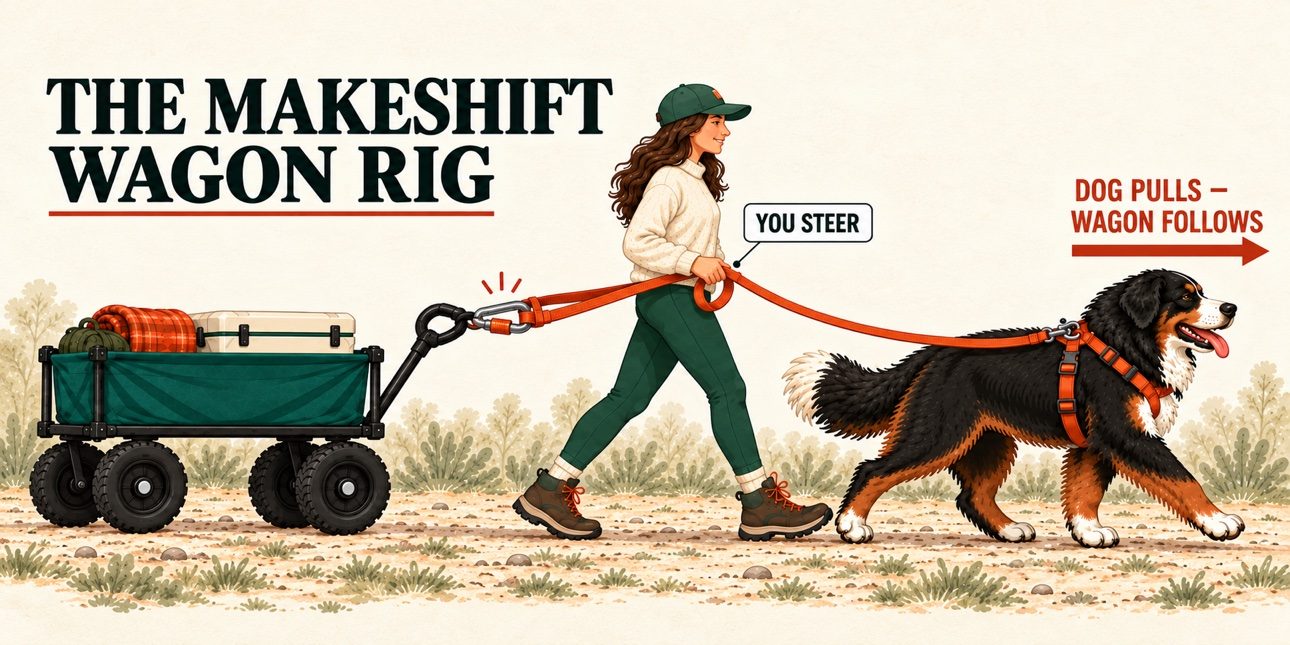
The gateway version needs a wagon and a leash, full stop. A garden wagon, a kid's pull wagon, the utility cart you already own. Clip the leash to the wagon handle, keep the other end in your hand, walk beside your dog, and let him "help" pull something light and ridiculous: pumpkins from the patch, a picnic to the park, firewood from the pile to the door.
The honest rules of Level 1:
What you get: the photos, the neighbors, a puppy who learns that a wagon behind him is not a monster, and a dog who starts to understand he has a job-shaped hole in his life.
Our house rig (this is Furio's actual setup):
The wagon itself: 600-lb poly dump cart, pneumatic tires, and the cart the DIY crowd converts when Level 2 calls.
See the pick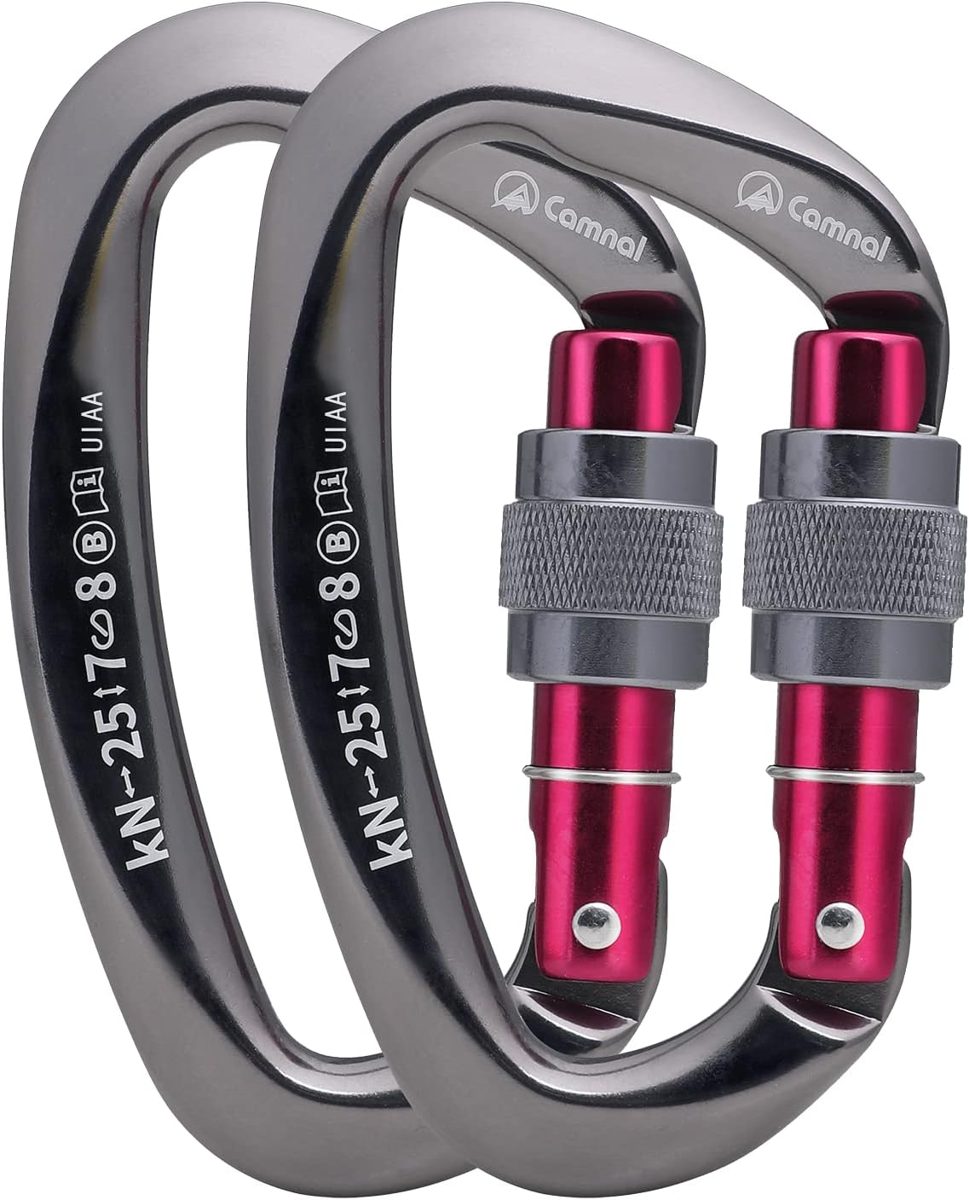
The entire connection system: two climbing-grade locking clips. One hand opens, everything detaches.
See the pickYour first hookup, step by step:
First-trip troubleshooting, learned the honest way: if he sits down to study the wagon, the wagon has won round one — unclip, play, try again tomorrow. If he lunges at a squirrel, that's what the quick release is for: open the handle clip and you're suddenly just a person walking a dog, holding a leash, standing next to a wagon that has seen things.
This is where carting becomes a thing you actually do: farmers-market runs, hauling the market haul home, beach gear, library books, the Christmas tree lot. The gear changes:
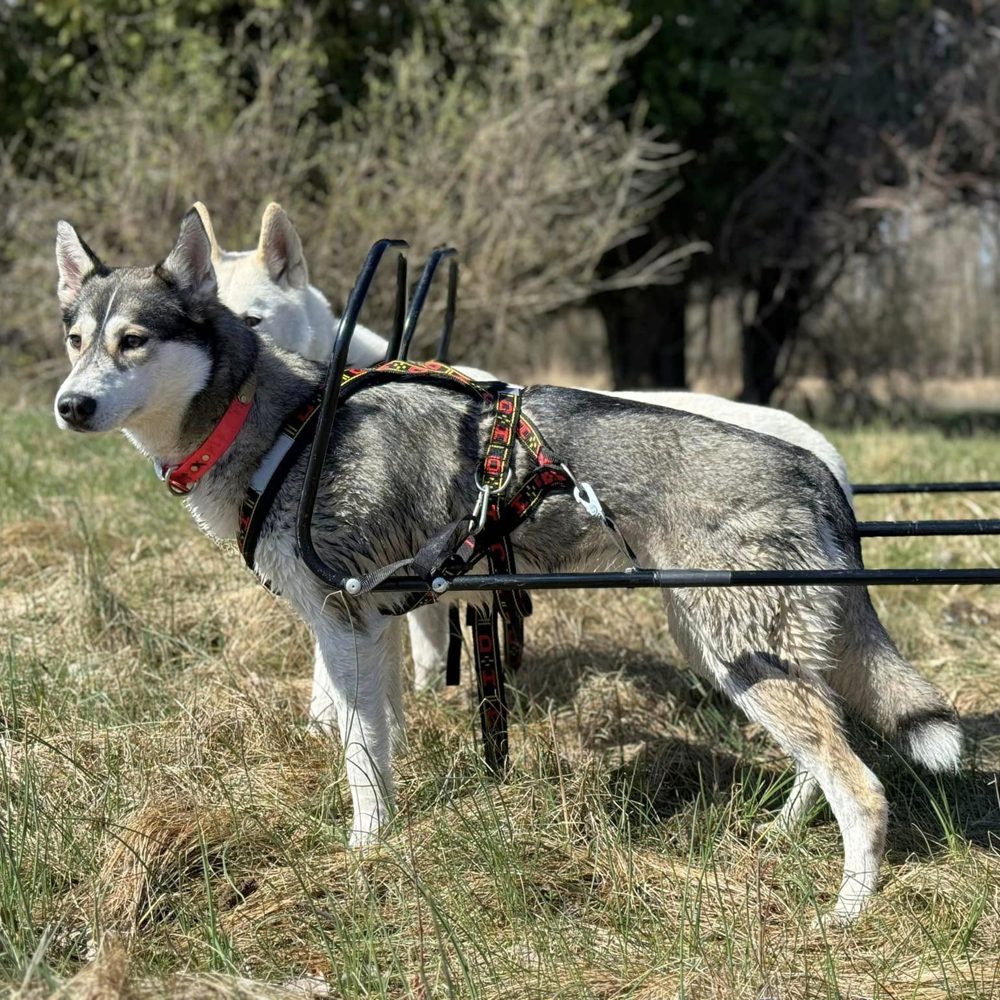
The budget-friendly way into a real draft harness — Howling Dog Alaska's cart/pulk harness, sized up to Berner weight.
See the pick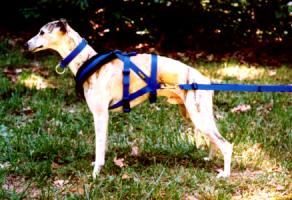
The traditional siwash from the specialist shop, in sizes to a 36-inch girth — the harness the draft-test world actually wears.
See the pickWhat you get: genuine exercise and mental work (a carting Berner comes home tired in the deep, satisfied way), errands with a parade attached, and the entry ticket to the club world — draft clinics, fun days, and "First Draft" assessments at breed events, where beginners can try carting with borrowed gear before buying anything.
Dogs to watch at this level: Riggie the Berner is documenting cart training week by week — an anxious dog taking to the harness like a champ, which is the most honest Level 2 footage on the internet. For the gear rabbit hole, Leanese Dog Carts' YouTube channel is a cart maker filming Berners pulling their new cart.
Yes, there is a professional tier, and Berner people are gloriously serious about it. The Bernese Mountain Dog Club of America runs draft tests with real titles: Novice Draft Dog, Draft Dog, and advanced levels where the dog pulls up to his own body weight — with a brace division for two-dog teams, which is exactly as magnificent as it sounds.
The gear graduates too: competition carts built on the Wilczek Woodworks designs (their WIN carts are the ones you see at Berner Nationals — the lineage is now built by Wainwright Cart Co.), fitted siwash harnesses, freight loads you don't choose in advance — Canadian advanced tests famously hand you an unknown load on the day: a tent, chairs, logs, pumpkins.
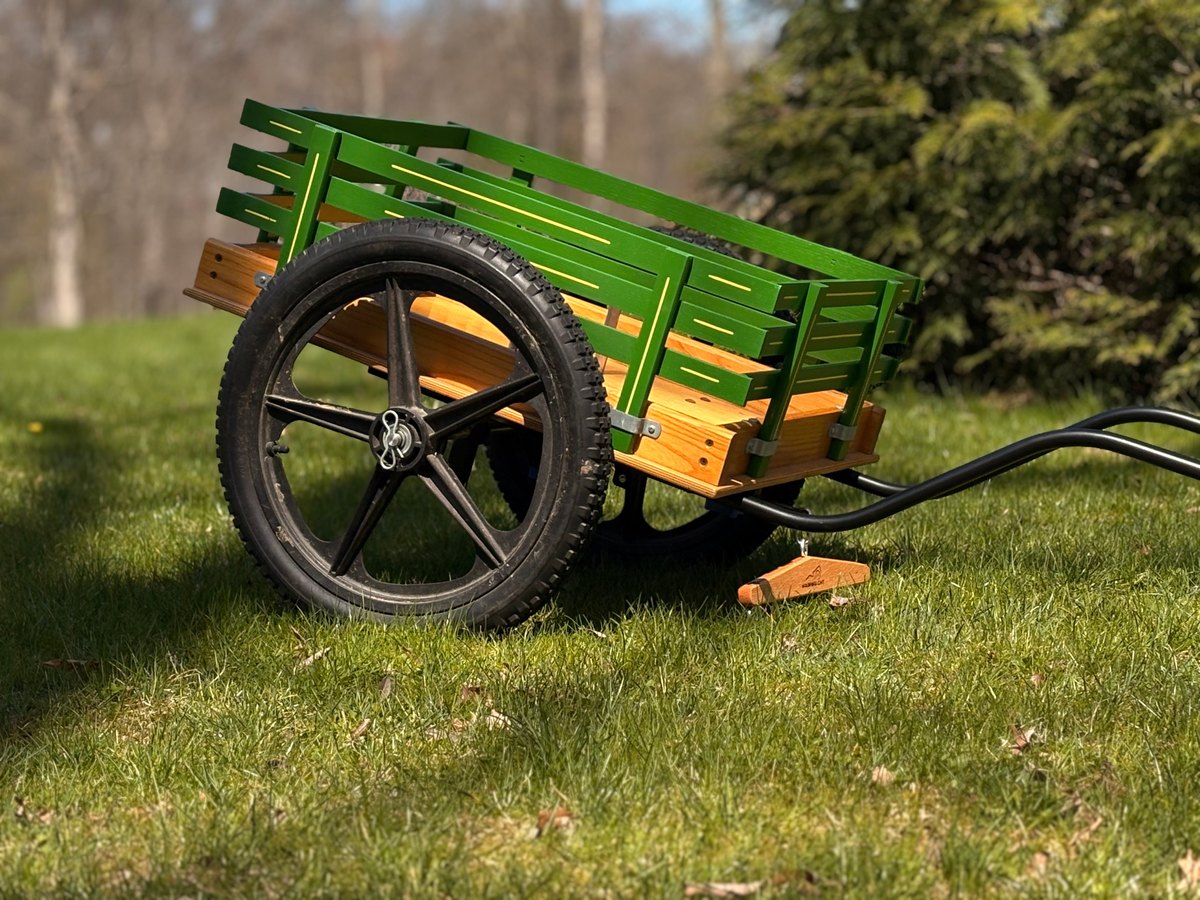
The graduation cart: handcrafted hardwood on the Wilczek lineage, in the size a full-grown Berner needs. The brace kit for a two-dog team is sold separately — for when the second Berner happens.
See the pickAnd the show side: at the UK Bernese club's celebration weeks, carters open the ceremonies, parade by torchlight, and compete in "Obstacart" — rally obedience, but with a cart. Carting is the breed's signature cultural performance, and Level 3 is where you become part of the tradition rather than a spectator of it. (The spectacle end of it: Berners pulling decorated carts at the Royal County of Berkshire Show.)
Where Furio sits on this ladder: Level 1, permanently and proudly. He has a wagon, two carabiners, and a route around the neighborhood that now includes freight. Levels 2 and 3 are in this article because they're wonderful and because some of you will catch the bug — but the Berner Edit's official position is that a dog who hauls the farmers-market bags home has already achieved the entire point of the breed's heritage. Titles optional. Snacks are not.
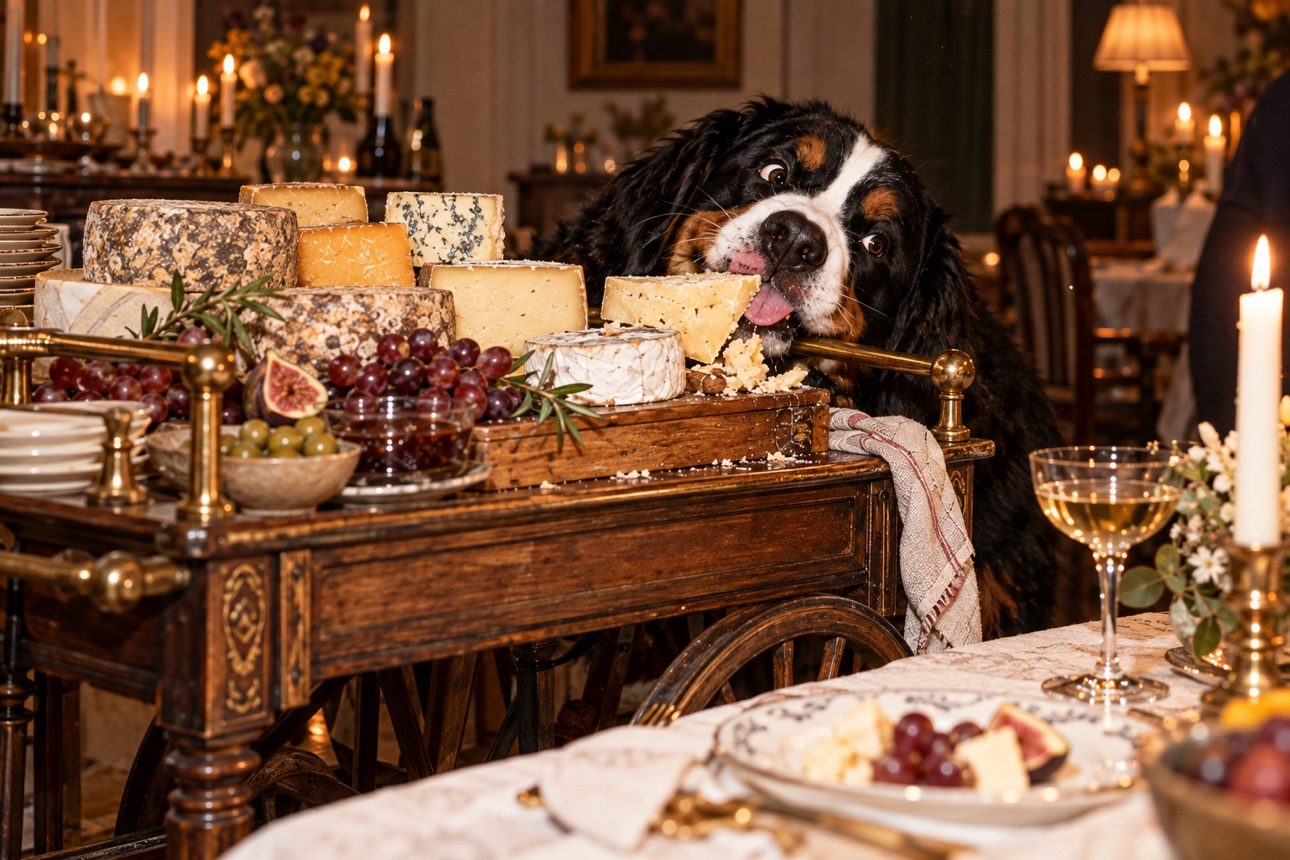
Start at Level 1 this weekend. The wagon is already in your garage, and your Berner has been waiting his whole life for someone to ask.
Everyday harness picks live in our no-pull harness guide; the whole carting shelf — wagon, clips, both harness styles, and the heritage cart — lives on the gear page.