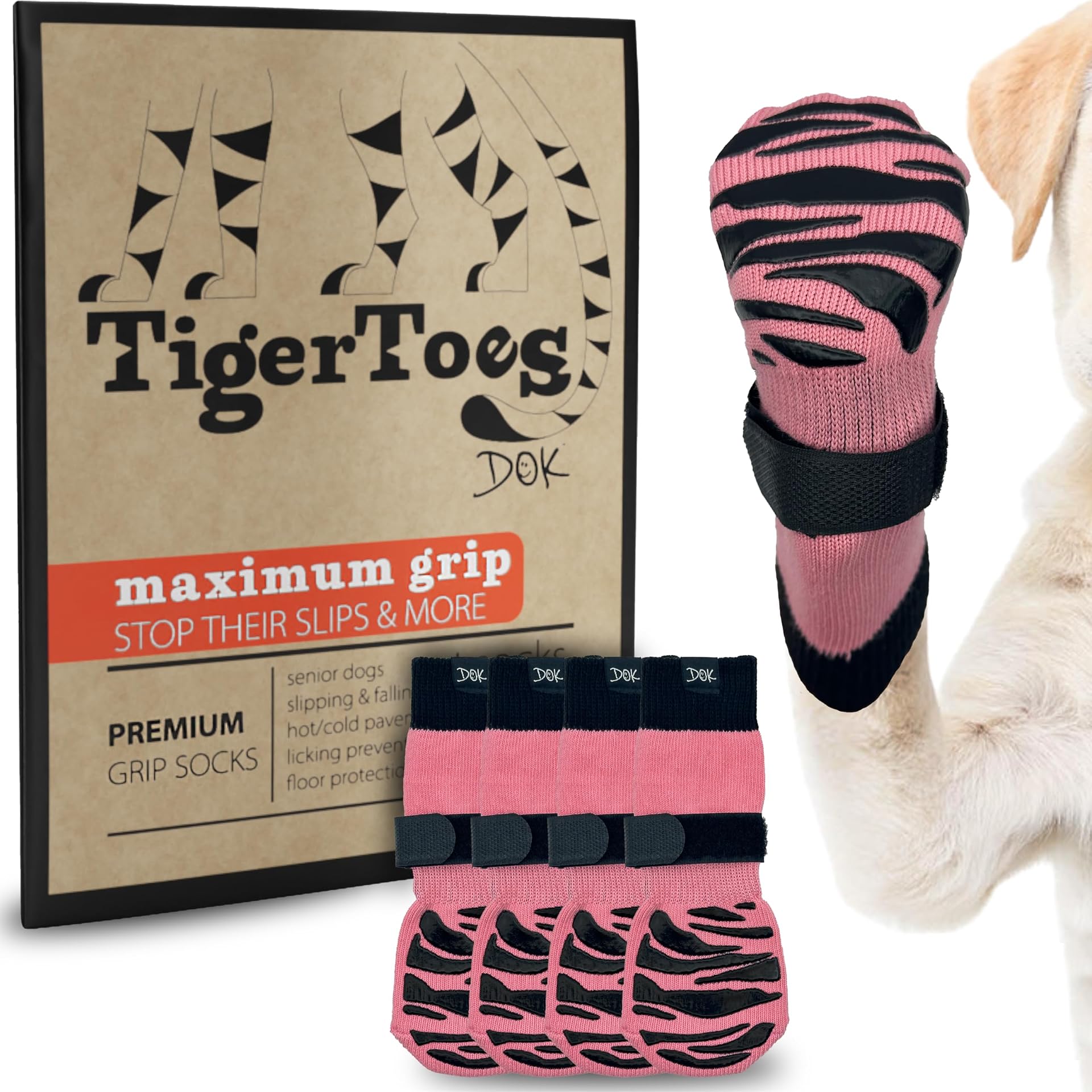
DOK TigerToes non-slip dog socks (XL)
The splurge — and Furio's own house pair: thicker knit, double-sided grip, survives its month gracefully.
See the pickA Bernese claws refinished our hardwood floors at great cost. Now the dog wears socks. The system: socks, foot-health rules, and what to do when toes flare.
 The Berner Edit
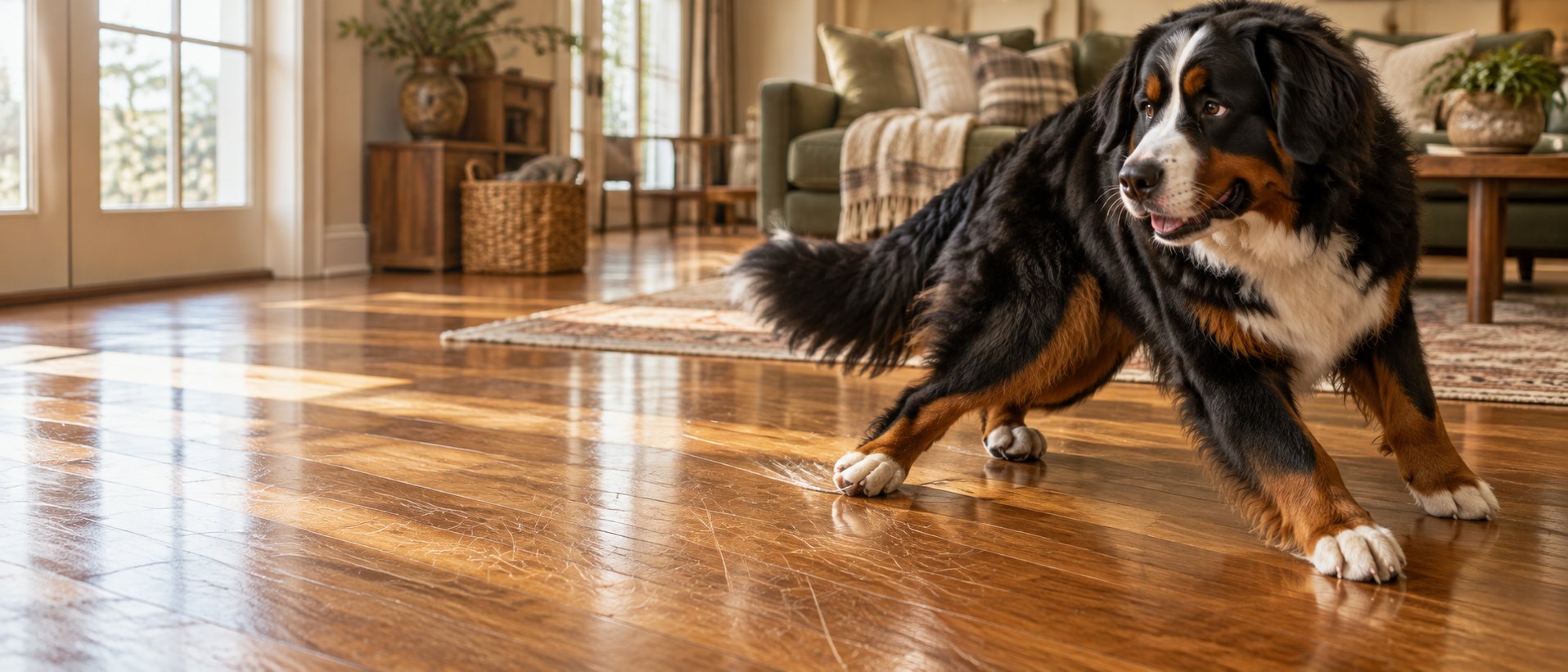
Every dog owner with hardwood floors eventually hears it: the click-click-click of claws on wood. It sounds harmless. It is a tiny jackhammer choir, and given a few years, it refinishes your floors — in the wrong direction.
We learned this at closing. Our first house had hardwood throughout, and by the time we sold it, the floors were scratched beyond recognition — years of Furio living his whole life on them. Refinishing them cost thousands of dollars, and the man with the sander did not accept "but he's a good boy" as payment.
So when we moved, the question came with us: how do you protect a floor from a Bernese — without turning the dog's life into a management program?
The standard advice is "just keep the nails trimmed," and we do. It isn't enough, for three reasons:
Conclusion we resisted for exactly one house: the paws need a barrier. Indoors, that barrier is socks.
Dog socks are a small product category with a surprising number of ways to get it wrong. What actually matters for a giant breed:
The two honest footnotes. First: whatever brand you buy, order the largest size they make. Berner paws are beyond most size charts' imagination, and a sock that runs small is a sock worn around one ankle. Second: socks are a consumable. Grips wear smooth, knit stretches out, elastic gives up — in this house, a set lasts about a month of daily wear before it's retired to the rag drawer.
Which is why the buy honestly comes in two versions, and both are defensible. Furio has worn several brands across the spectrum: at the premium end, a thicker, better-made sock (the Tiger Toes by DOK) that survives its month gracefully; at the budget end, the cheaper multi-packs like the EXPAWLORER six-pack, replaced without a flicker of guilt. Splurge or save is a preference here, not a virtue — the floor cannot tell the difference, and neither, it must be said, can the dog.
There's also a third lane worth knowing: Power Paws by Woodrow Wear, the rehab world's staple — thirteen sizes across two foot shapes, no strap at all, ten dollars a set direct from the maker. If your Berner's paws defeat every size chart you meet, that's the door to knock on.
The fitting itself is a thirty-second ritual, and seeing it once beats reading about it — from the Power Paws maker, socks on and fit checked. (Their party trick: the sock looks impossibly small, then stretches on. That stretch is the fit.)
Putting Power Paws socks on and checking the fit (Woodrow Wear)
The splurge — and Furio's own house pair: thicker knit, double-sided grip, survives its month gracefully.
See the pick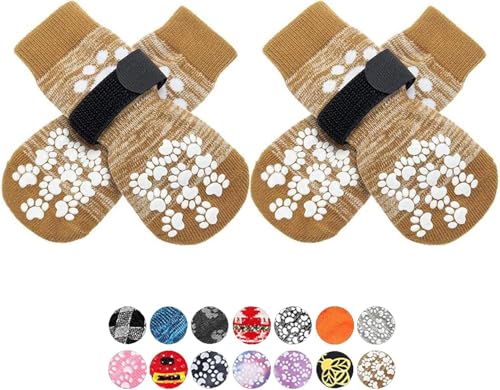
The save: six socks for about nine dollars. Lose one, shrug, carry on.
See the pick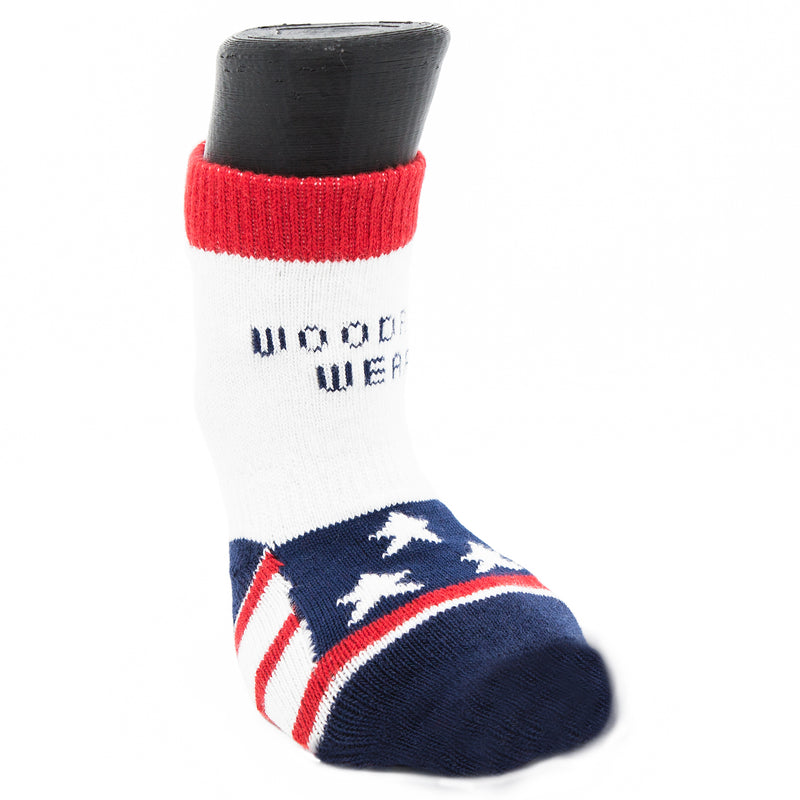
The specialist: 13 sizes, two foot shapes, sized honestly for giant paws.
See the pickAnd the finished look, in motion — one reviewer's dog doing his rounds on hardwood in the TigerToes, high-step phase included:
TigerToes Premium Non-Slip Dog Socks for Hardwood Floors — a review (Seb & Mich)
[Ling: photo here — Furio wearing his socks at home.]
Socks are one shelf in a whole drawer of things humans put on dog feet, and half the confusion in this space is that the other shelves keep getting borrowed for the indoor job. The field guide:
Real boots — rubber soles, closures, actual structure, like the Ruffwear Grip Trex. Outdoor tools: Vibram soles for ice, scree, and pavement hot enough to burn a paw pad. Indoors they're overkill with downsides — they track the outdoors in on their treads, and most dogs will tolerate them for a walk, not a day.
Disposable rubber boots — the PawZ family: natural-rubber balloons that seal the paw completely. Nothing beats them for sidewalk salt, mud season, or keeping a bandage dry on a wet walk. Also, nothing breathes less — the maker itself says supervised, short wear only. A weather tool, not a house shoe.
Nail grips — Dr. Buzby's ToeGrips: rubber rings that slip onto the nail tips, so the nail itself becomes the cleat. Genuinely clever for a senior dog who's started to slip — nothing touches the paw, so even sock-refusers accept them, and once they're on they work around the clock. But read the name literally: they grip with the nail, which means the nail is still on your floor. Traction, yes. Scratch protection, no.
Compression socks — the tight, strap-free kind, like the Power Paws up above: the sock family's minimalist branch. Same virtues, glove fit, nothing to fasten.
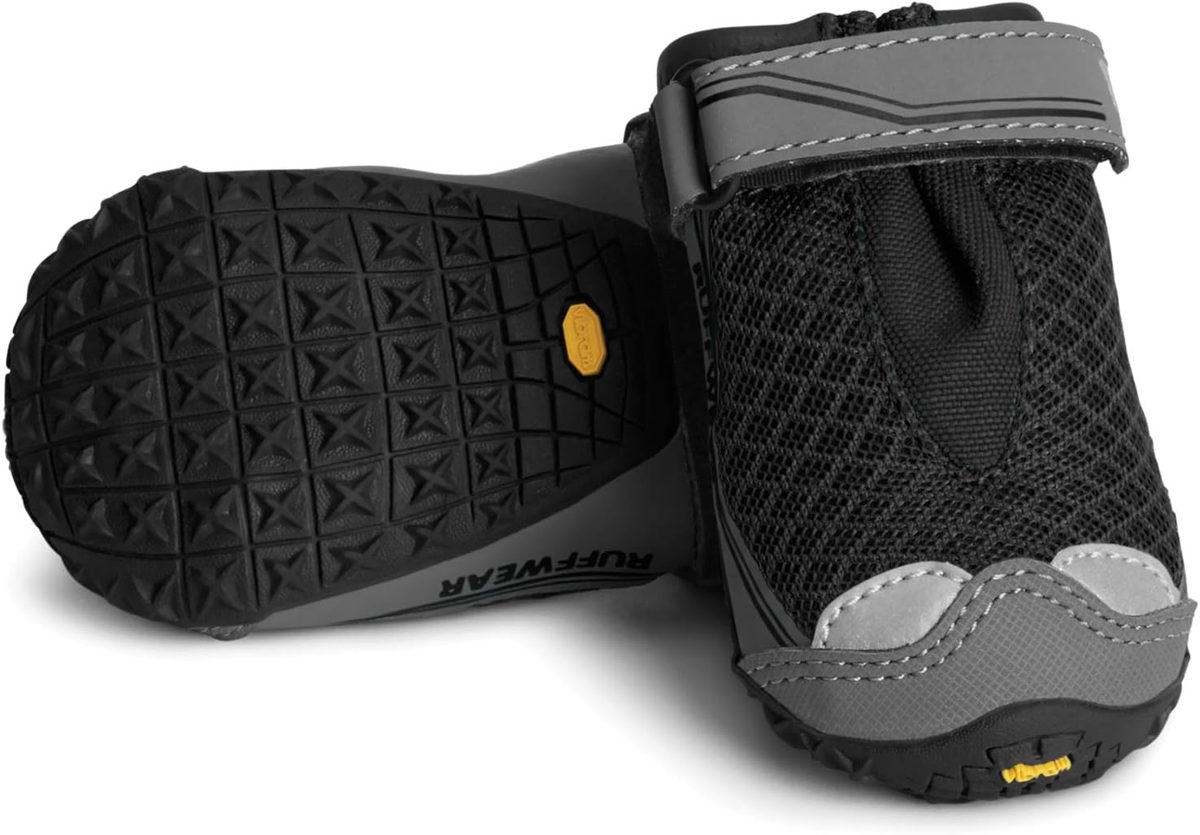
The outdoor tool: Vibram soles for ice and hot pavement — not living rooms.
See the pick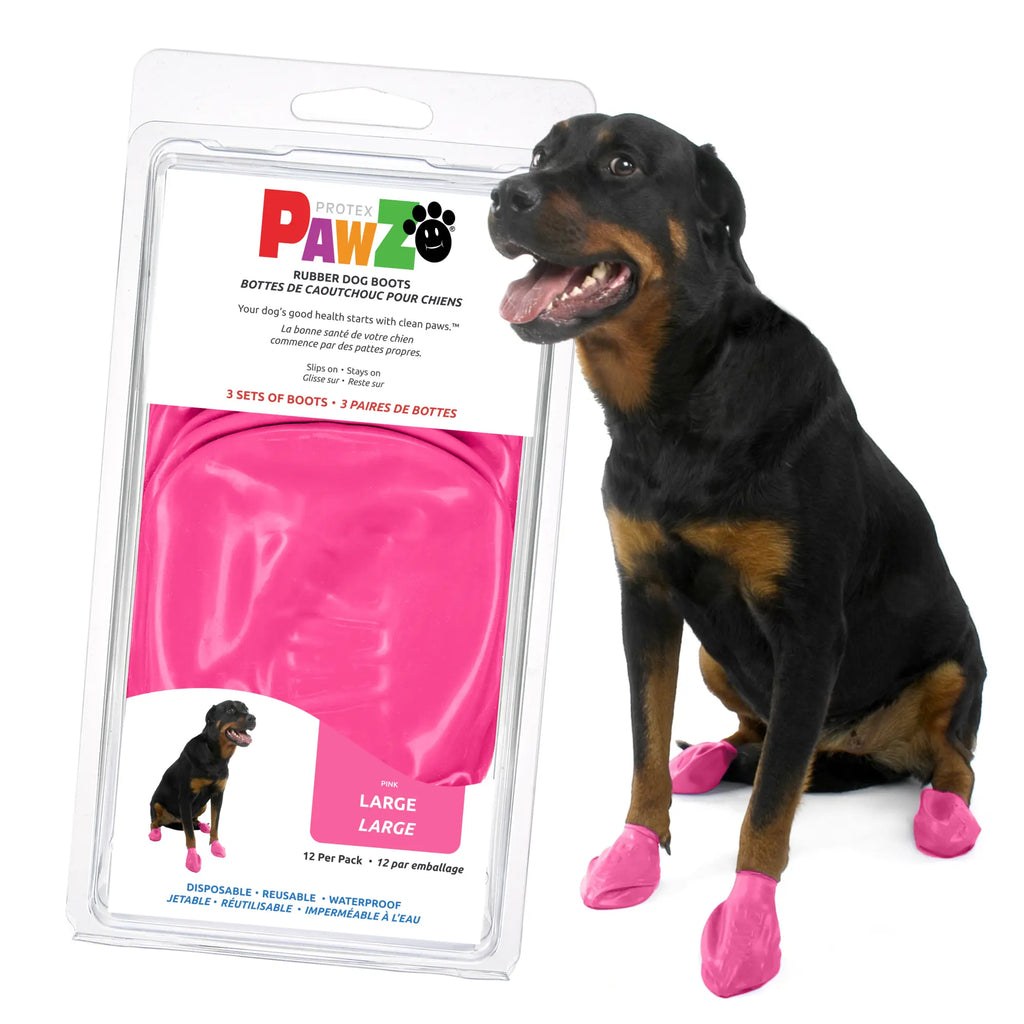
The weather seal: salt, mud, and bandage cover. Supervised wear only.
See the pick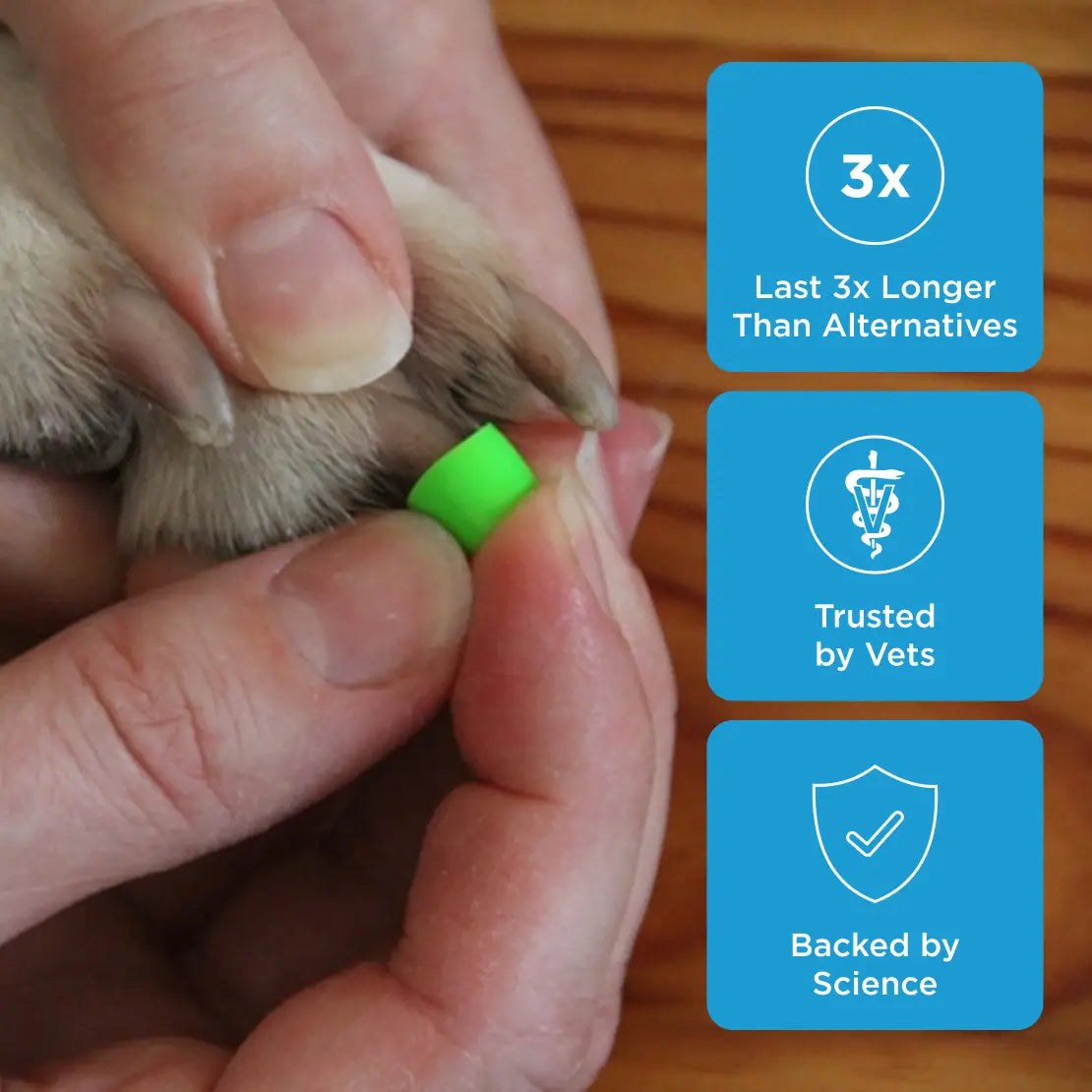
The cleat conversion: traction from the nail itself — which is also its limit.
See the pickSo why socks, indoors? Because they're the only thing in the drawer that does both halves of the job at once: rubber grip under the paw for the dog (anti-slip), soft knit over the nails for the house (no scratches) — while staying breathable enough for daily wear, washable, and cheap enough to treat as the consumable they are. Everything else optimizes one variable and sacrifices the other. Boots protect the paw and ignore the floor. Grips fix the slip and leave the scratch. Balloons seal everything and breathe nothing. The sock is the compromise that isn't one.
Socks solve the floor problem. Worn carelessly, they create a foot problem. Our house rules:
Between-the-toes inflammation (interdigital dermatitis, if you want the vet-word) is the Berner foot issue: red, damp, itchy webbing that the dog then licks into a bigger problem. Our routine for a mild flare:
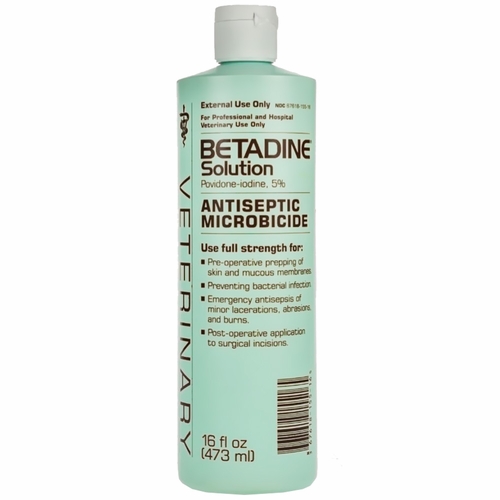
Weak-tea soaks: the brown bottle that lives by the sink.
See the pick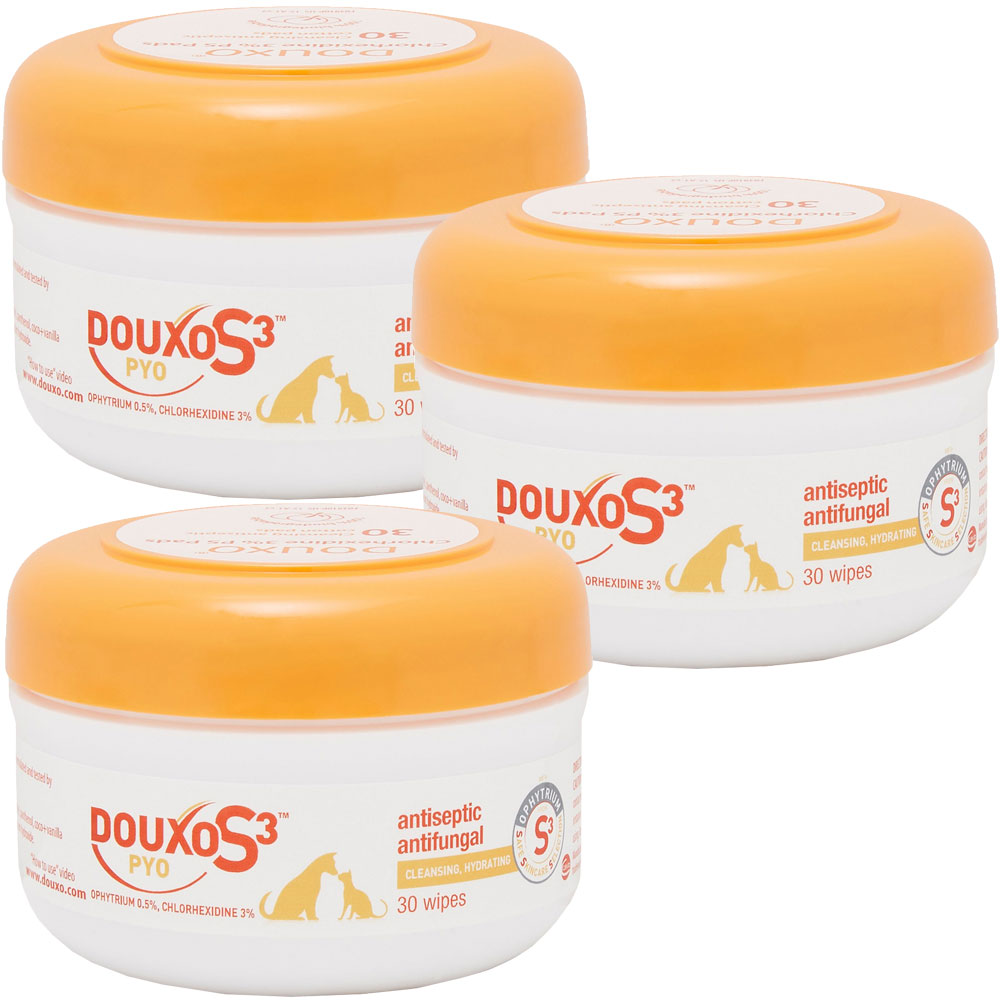
One pad between each toe at the evening check.
See the pick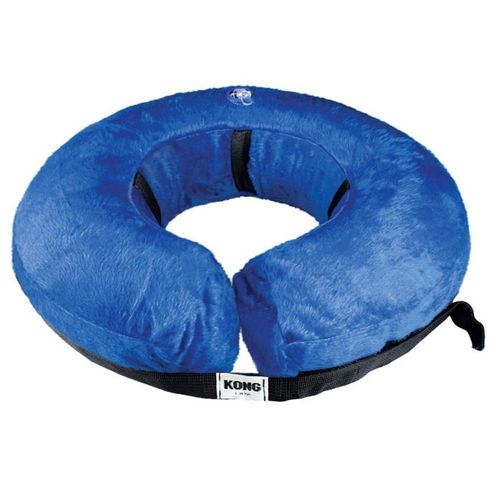
The donut that ends the lick cycle — XL fits necks 20–25 in.
See the pickThe honest limit: a flare that spreads, smells foul, makes him limp, or doesn't improve in a few days is a vet visit, not a stronger home remedy. Feet are how a 110-pound dog gets everywhere; don't improvise with them for long.
It would be easy to write this as a flooring article with a dog in it. But the socks only earn their place because they're good for both ends of the leash: the floors keep their finish, and the dog gets traction on the slippery rooms, warm dry feet in winter, and a human who checks his toes every day and catches small things while they're small.
Protect the house, yes. The dog was never the obstacle to that — he was the reason for the house rules in the first place.
Everything in this system — the sock drawer, the paw-care shelf, and the rest of the tested kit — lives on the gear page.