Curated picks for Bernese Mountain Dog households. · We earn from qualifying purchases.
Shop · Food
Sensitive-stomach food for Bernese Mountain Dogs
Berners are famous for dramatic digestion. Ask a Berner owner what they want from food and the answer is usually some version of "whatever doesn't give him the runny poops." But "sensitive stomach" isn't one dog — it's five different dogs with five different problems. Find yours below, then shop the lineup built for it.
The Berner Edit may earn from qualifying purchases — links on this page are affiliate links. We only list products we'd buy for our own Bernese.
Find your dog
Start with the persona that sounds like your kitchen. Each one points at the products that actually help it — the full lineup is below.
The Sensitive Stomach
The classic Berner. Fine on Monday, liquid on Tuesday, and nobody changed anything — or so you think. This dog has a food-change diary and a graveyard of half-finished bags. One community lesson worth knowing early: a rushed transition causes the exact upset that gets blamed on the new food. If every bag "failed," the switch speed may be the problem, not the formula. Your starting lineup: a salmon-and-rice kibble, pumpkin in the bowl every morning, and a probiotic on standby for transitions.
The Picky Eater
Sniffs, walks away, comes back in an hour to check if you upgraded. Not sick — just opinionated. The trick usually isn't a better kibble, it's making the kibble smell like dinner: a drizzle of salmon oil, a spoonful of pumpkin mixed in, or a probiotic packet used as a topper. If pickiness shows up suddenly, or with vomiting or weight loss, that's a vet conversation, not a topper problem.
The Gulper
Inhales dinner in 90 seconds, then looks confused about where it went. Speed-eating means swallowed air and regurgitation — and in a deep-chested breed like a Berner, gulping is worth taking seriously. Adults do best on two meals a day — split, not one big bowl — which also helps with bloat risk in a deep-chested breed. Keep the bowl still (a bowl that slides across the kitchen makes it worse), and skip hard exercise right after eating.
The Itchy & Gurgly
Scratching and stomach trouble together. Skin and gut are the same conversation in a Berner: a salmon-based formula covers both ends, and omega-3s do the coat work from the inside out. If the itching is severe, seasonal, or comes with hot spots, get the vet involved — food helps, but it doesn't diagnose allergies.
The Senior
The 8-year-old who still thinks he's a puppy but digests like a retiree. Joints and stomach both need attention now: large-breed calcium control, gentle fiber that doesn't punish an older gut, and omega support for the coat that's thinning with age.
The kibbles
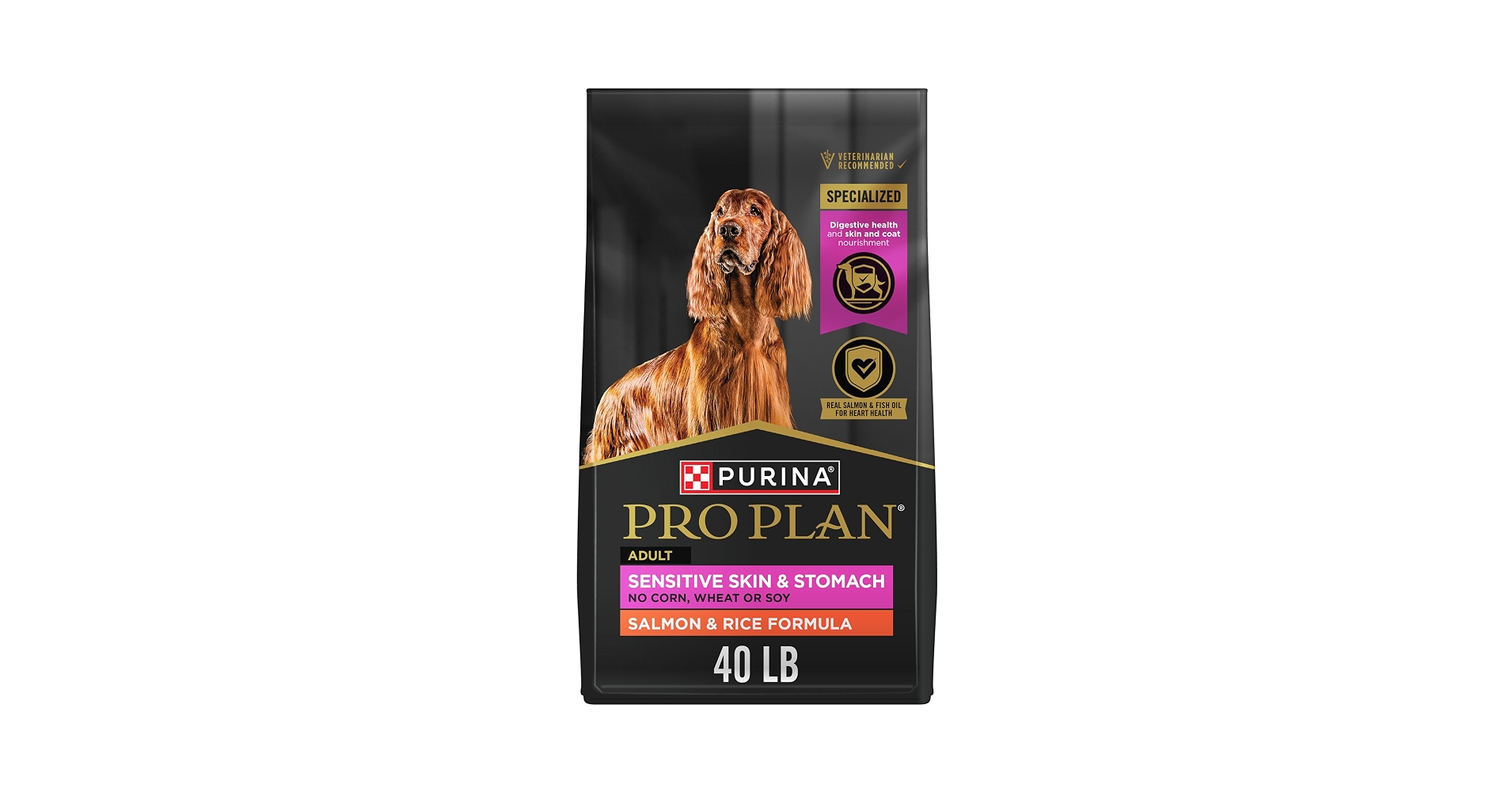
Purina Pro Plan Sensitive Skin & Stomach, Salmon & Rice
The Berner-community default: easy-to-digest salmon, rice instead of corn-heavy fillers, and omega fatty acids that show up in the coat. The first move when chicken turns out to be the trigger — chicken and poultry allergies are the most common ones owners report.
See the pick
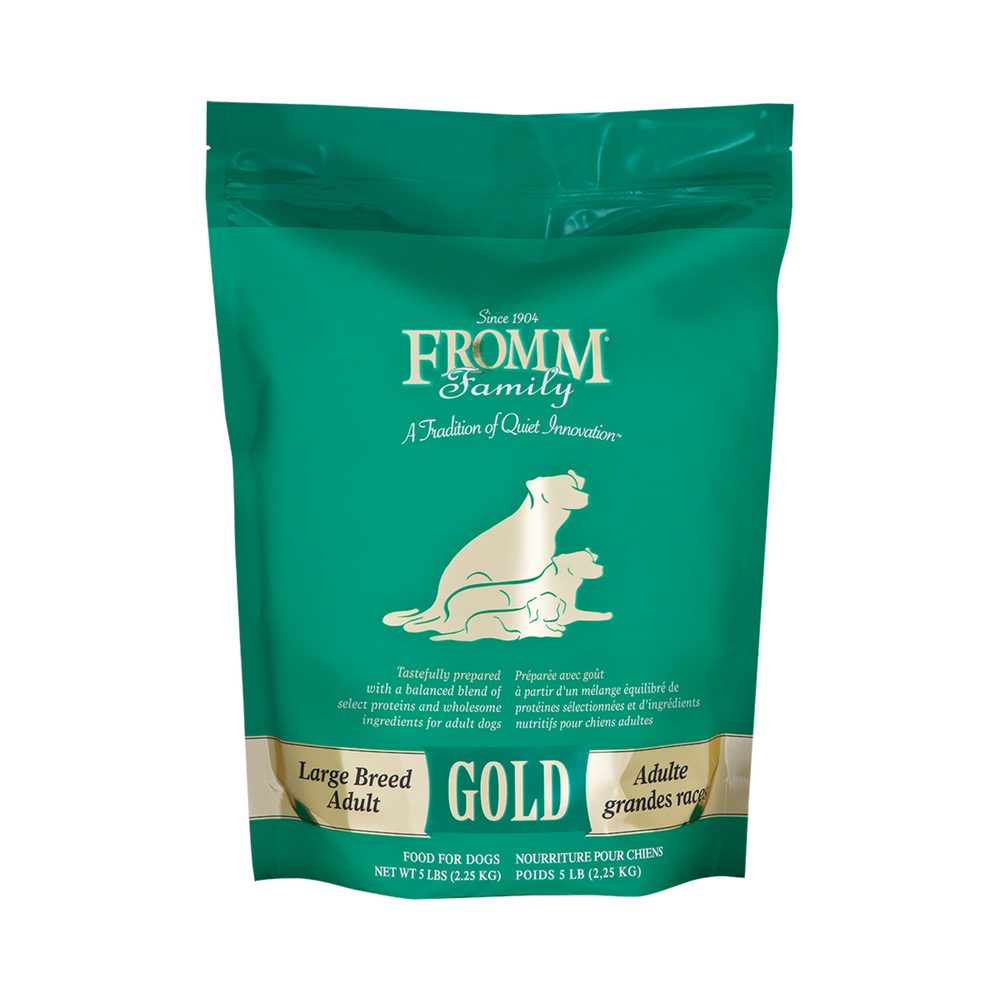
Fromm Large Breed Adult Gold
Family-owned, large-breed-specific nutrition with controlled calcium for joints. The community ranks it #2 specifically because it has no legumes — relevant if you're watching the DCM investigation. One caveat: it's chicken-based, so if chicken is your dog's trigger, go salmon instead.
See the pick
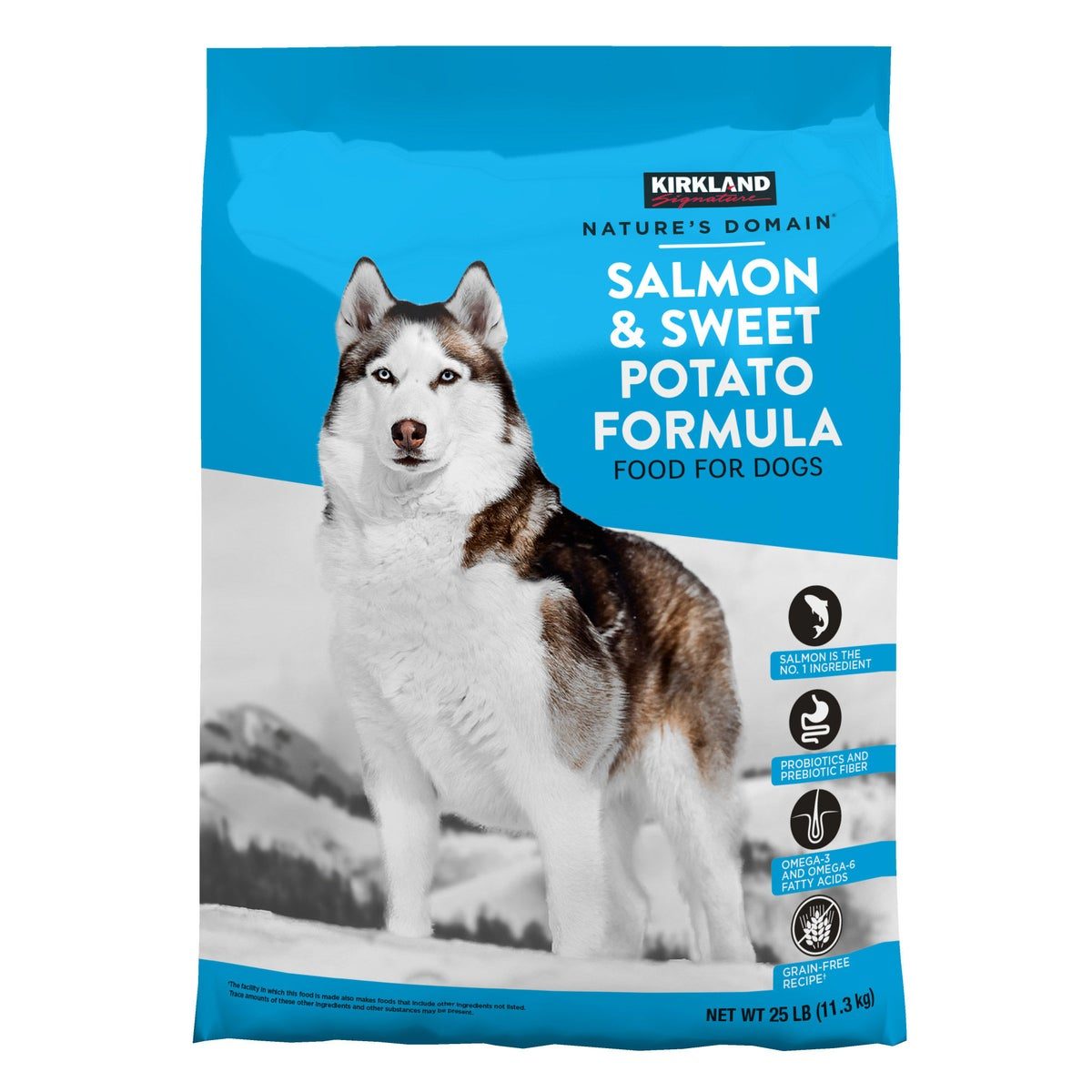
Kirkland Nature's Domain Salmon & Sweet Potato (Costco)
The budget pick with a following: salmon-based, grain-free, with live probiotic cultures — at about $1.28 a pound, which is how a 110-lb dog's food bill stays sane. Berner food alone runs $69–108 a month; this is the number that keeps it at the low end.
See the pick
The sensitive-stomach stack
Three products, in order, for the weeks the Berner stomach files a protest. This is the protocol, not a shopping list — most days you only need step one.

Native Pet Pumpkin Powder (120 scoops)
Step one of the stack. Pumpkin works in both directions — absorbs water when things are loose, adds bulk when they're not — and the powder form means it's actually in the bowl at 6 a.m. At one scoop per 25 lbs, a Berner needs the big canister.
See the pick
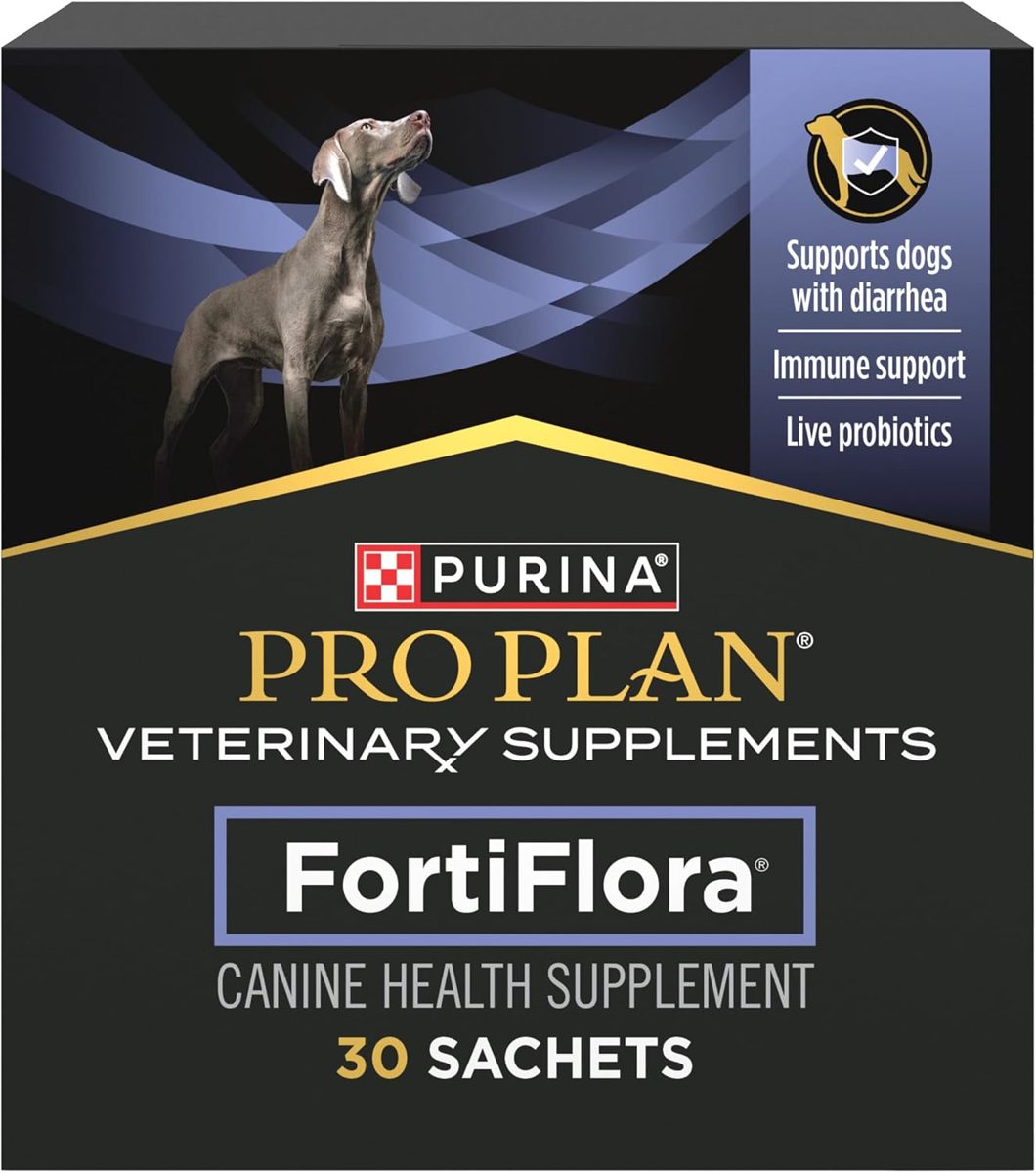
Purina Pro Plan FortiFlora probiotic (30 ct)
Step two. What vets hand you at checkout: one packet a day over food during a flare, a food transition, or a course of antibiotics. Dogs eat it like a topping, not a medicine — which also makes it a Picky Eater trick.
See the pick

Zesty Paws Wild Alaskan Salmon Oil (32 oz)
Step three. Omega-3s for skin, coat, and a calmer gut — and the Picky Eater's best friend, because a drizzle makes kibble smell like dinner. 100+ lbs means six pumps; start at half dose for a week.
See the pick
The bowl
Honest note: a bowl won't slow your dog down — only a slow-feeder design does that. What helps a Gulper is a bowl that stays put: a plastic bowl sliding across the kitchen makes fast eating faster and messier. The Waggo Dipper stoneware bowl (8 cups, glazed, dishwasher safe) is heavy enough that a Berner can't nose it across the floor — and the muted glazes look like pottery, not pet supplies.
Compare everything
| Product | What it is | Best for |
|---|
| Pro Plan Sensitive | Salmon & rice kibble | The Sensitive Stomach, the Itchy & Gurgly |
|---|
| Fromm Large Breed Gold | Chicken / duck kibble | The Senior, large-breed joint support |
|---|
| Kirkland Salmon & Sweet Potato | Salmon kibble, warehouse price | The Sensitive Stomach on a budget |
|---|
| Native Pet Pumpkin Powder | Organic fiber powder | Step 1 of the stack — firms things up |
|---|
| FortiFlora | Single-strain probiotic packets | Step 2 — flares, transitions, antibiotics |
|---|
| Zesty Paws Salmon Oil | Omega-3 pump bottle | Step 3 — coat, skin, and the Picky Eater's topper |
|---|
| Waggo Dipper Bowl | Heavyweight stoneware, 8-cup | The Gulper's stationary bowl |
|---|
How to read a sensitive-stomach label
- Named protein first. "Salmon" or "salmon meal" as the first ingredient beats a vague "meat meal." Novel proteins (salmon, duck) are the usual sensitive-stomach play because the dog hasn't built up a reaction to them.
- Rice over corn, wheat, and soy. Rice is the gentle carb in most sensitive formulas — easy to digest, low drama. It's not that corn is poison; it's that rice is the safer bet when the gut is already unhappy.
- Probiotics listed, not promised. Live cultures in the ingredient list mean gut support is built in. A bag that just says "supports digestion" on the front without anything in the panel is marketing, not formulation.
- Large-breed formulation matters. Controlled calcium protects growing joints — a Berner puppy on regular adult food is a joint problem waiting for a vet bill.
- Grain-free is a question, not an answer. Some Berner owners swear by it, some vets prefer grains in the diet. Grain-inclusive is fine absent a confirmed allergy. Ask your vet rather than treating the label as a verdict.
- Know the common triggers. Chicken, beef, wheat, and soy are the ones Berner owners report most. If you're doing an elimination, single-novel-protein (LID) formulas — salmon, lamb, or duck as the only protein — are how the community narrows it down.
- Watch legume placement. Multiple legumes high on the ingredient list (peas, lentils, chickpeas) are worth flagging — the DCM investigation made this a real label-reading habit, not a fad. A formula with rice as the carb and no legume pile-up is the safer default.
The 10–14 day transition
Berners punish rushed food changes — and the community's most repeated lesson is that a fast transition causes upset that gets misread as a food reaction. The bag didn't fail; the switch did. Don't switch cold — blend, and keep pumpkin in the bowl through the whole switch.
- Days 1–3: 25% new food, 75% old. Pumpkin in every meal.
- Days 4–7: 50 / 50. Add a FortiFlora packet if stools loosen.
- Days 8–11: 75% new, 25% old.
- Days 12–14: fully switched. If things are still loose at day 14, stop and reassess — it's the formula, or it's not food at all.
When it's not food
- Persistent vomiting, diarrhea longer than 48 hours, or weight loss deserves a vet visit, not a new bag.
- Blood in stool or vomit, lethargy, or refusal to eat — vet, promptly.
- Severe, persistent cases have a next tier before you give up: vet-adjacent therapeutic formulas (Royal Canin and Hill's are the names owners cite most for genuinely severe stomachs). That's a vet conversation, not a shopping decision — but it's worth knowing the tier exists.
- Community staples owners keep on hand beyond this page's picks: pumpkin, a probiotic, and Pro Kolin digestive paste for acute flare days. Ask your vet before adding anything new to a flare protocol.
- Restlessness, a swollen belly, and retching without vomiting is a bloat emergency. Emergency vet, immediately — this is the one Berner owners should never wait out.
- Costco shoppers: Kirkland's salmon & sweet potato is another Berner-owner staple — same gentle-protein logic, warehouse price.
How we test — food picks are editorial for now; feeding trials aren't something we fake.